For those of us who are used to gulping down bitter espresso shots, this Ethiopian coffee is remarkably mild and nuanced. We quickly realise that Johan & Nyström take coffee seriously and focus on quality above all else.
Purchasing and coffee growers
Jonas Hult soon arrives for coffee and, after some persuasion, agrees to have a cup (which one it is on that particular day, no one really knows). Jonas is a green coffee buyer at Johan & Nyström and has the most flying hours at the company. He visits Johan & Nyström's producers primarily to nurture long-term relationships, which is important for ensuring the supply of high-quality coffee beans year after year.
Local coffee
Jonas talks knowledgeably about the different ways in which coffee is grown in different parts of the world. For example, the mild, delicious coffee we are drinking right now is sold by the Haru washing station in southern Ethiopia, which in turn buys the coffee beans from more than 2,000 local small-scale coffee growers. Some of the smallest growers may only have a couple of coffee trees behind their house, which they harvest as the berries ripen. They then take them to the washing station, a couple of baskets at a time. Some other larger-scale growers, often in other parts of the world, such as Brazil, may have coffee plantations covering several hectares. These producers often have the opportunity to wash and process the coffee beans themselves.
Much is picked by hand
Most of the coffee that Johan & Nyström buys is picked by hand, and the largest growers do not bother with this. The larger the plantations, the greater the risk that unripe and overripe berries will be picked by mistake when the large machines harvest them, and this of course does not provide the quality that Johan & Nyström needs. All coffee at Johan & Nyström is also known as Speciality Coffee, which means that it is of a recognised high quality, i.e. over 80 points on the 100-point scale developed by the international coffee organisation SCA.
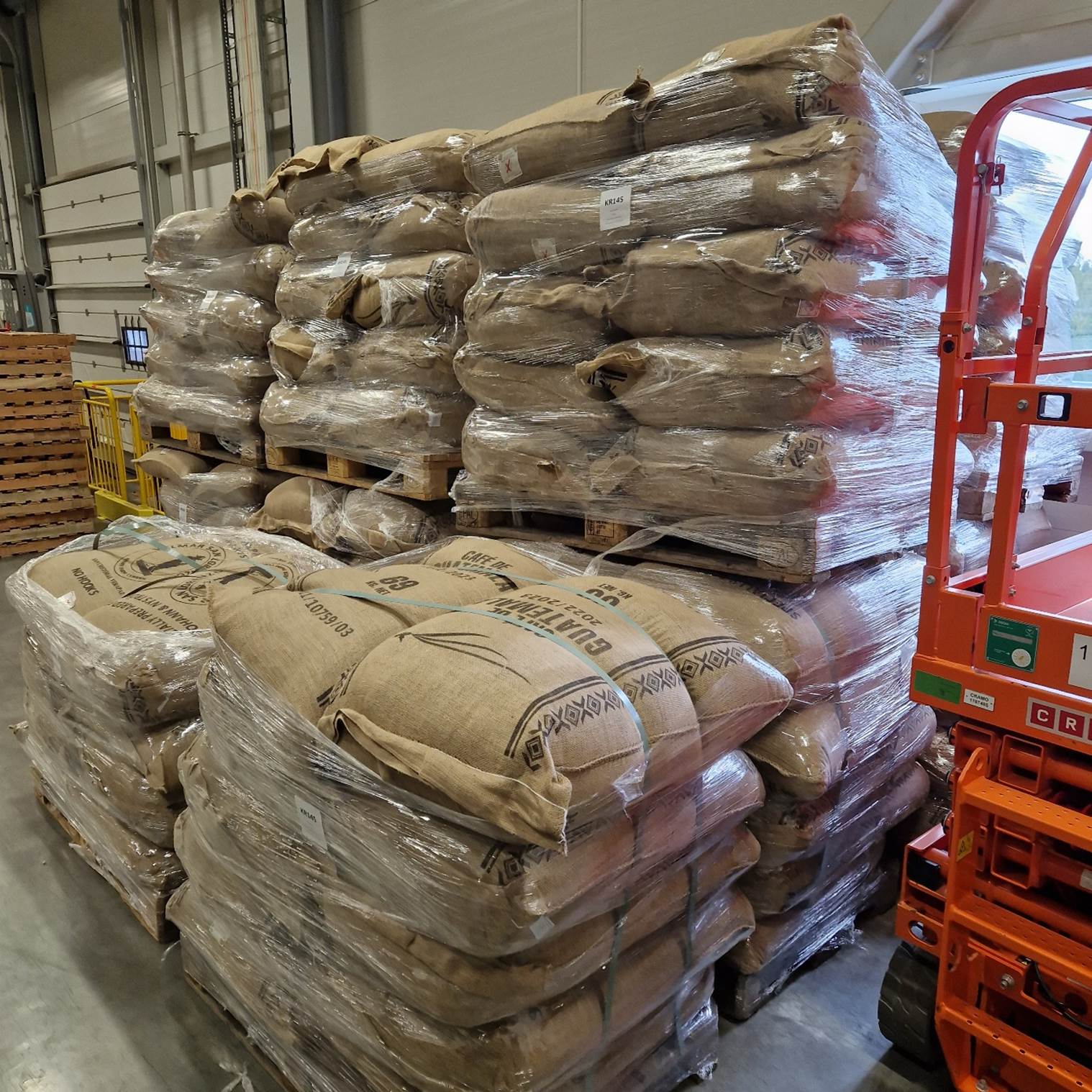
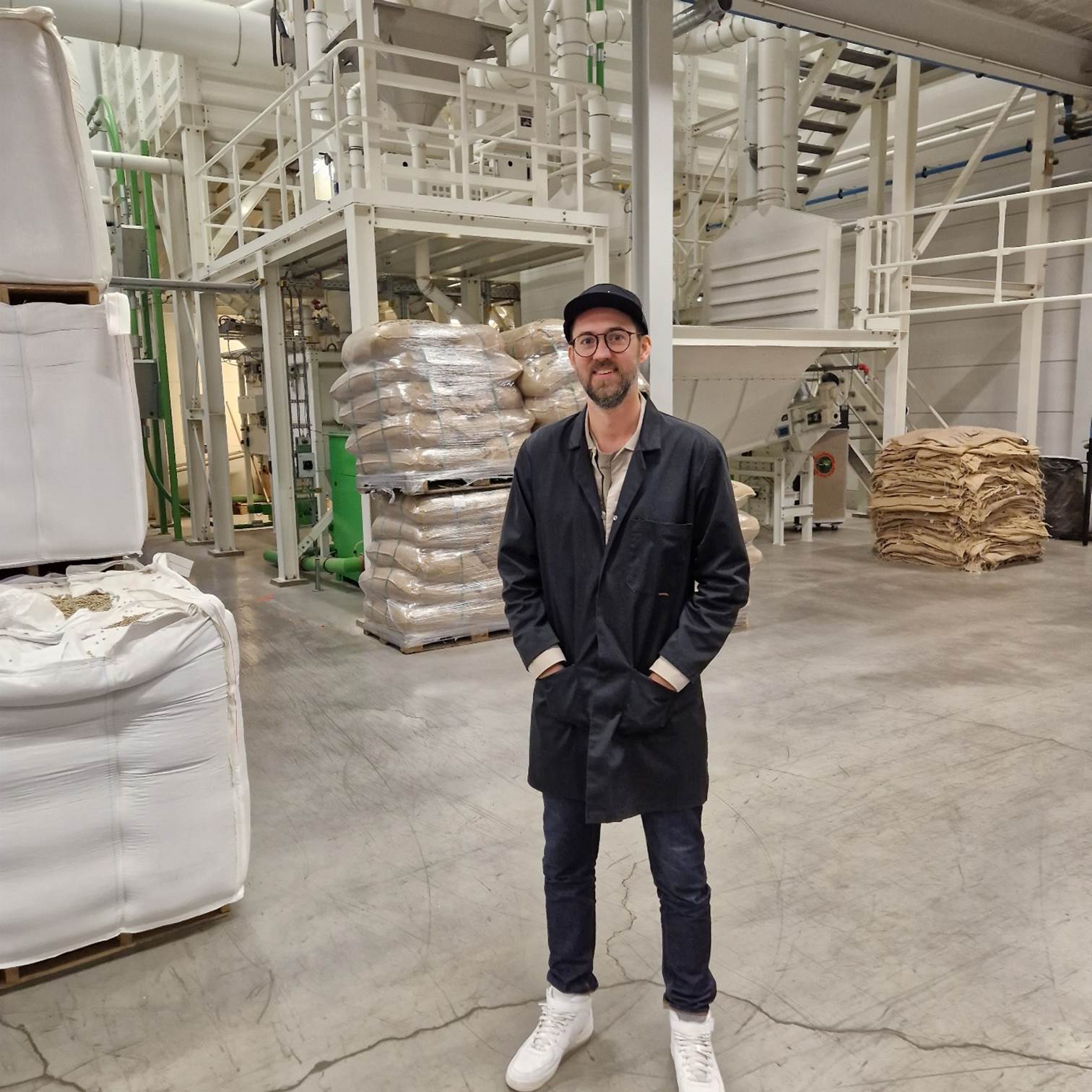
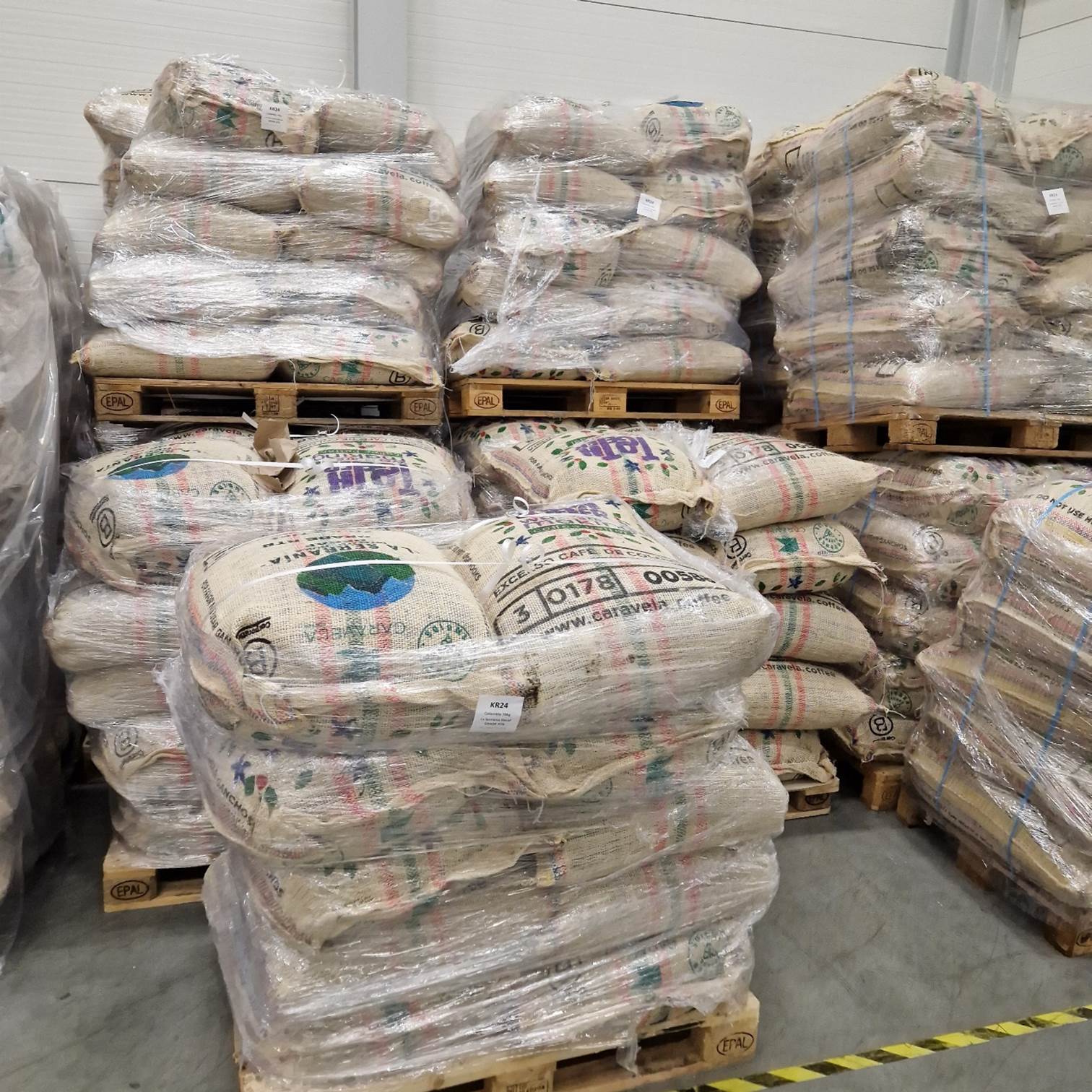
Dressed in black Johan & Nyström caps and coats, it is now time for a tour. After the obligatory hand washing in the "lock", we are shown into the warehouse and roastery. The first large part of the roastery houses the goods reception and green coffee warehouse. The ceiling is high and pallets are stacked high with jute sacks from all corners of the world. There is a strong aroma in the air. "That's the green coffee," says Jonas. In the past, you could also smell the typical aroma of jute sacks in halls like this, but nowadays the jute in the sacks isn't really jute...
The raw coffee hall
The raw coffee hall, which stores around 150 tonnes of coffee, also houses the first part of the machinery. A giant sorting machine sends the different coffee beans criss-crossing the hall to land in one of 20 different silos (large funnel-like containers up in the ceiling). A computer keeps track of which coffee ends up in which silo, which is of course important when the system is then asked to blend the right varieties to produce, for example, Johan & Nyström's bestseller "Bourbon Jungle". We will come back to that.
A little decaffeinated too
On the way into the roastery itself, we stop at some colourful sacks that turn out to contain decaffeinated coffee. Not as big in Europe as in the US, but it still deserves its place in Johan & Nyström's range. Many coffee retailers who have large agreements with other brands still buy their decaffeinated coffee from Johan & Nyström. It is decaffeinated using the "sugar cane" method, which involves extracting ethyl acetate from sugar cane, mixing it with water and then soaking the beans in the mixture. The caffeine is extracted and most of the coffee aromas remain. Ethyl acetate sounds "dangerous" but is a variant of acetic acid and is found in many fruits, such as bananas.
Once inside the roastery, we pause for a moment at a Loring roasting machine. This is where Johan & Nyström roast their finest single-origin coffee. Smaller batches of up to 70 kg at a time produce the best results, and the Loring gives the roaster more control over the degree of roasting.
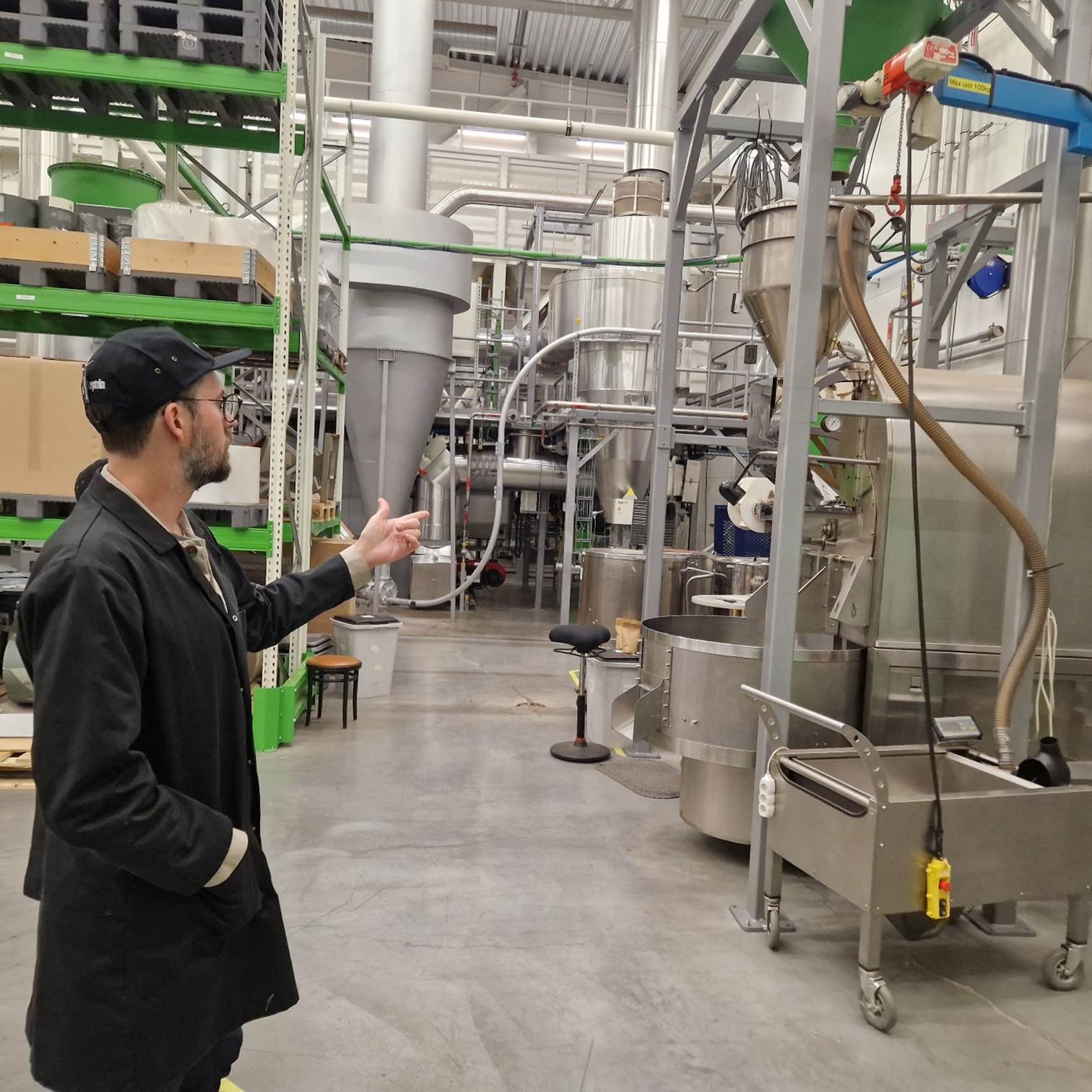
Behind the Loring looms the Stora Rosten (Big Roaster). This is where the bulk of the coffee varieties sold by Johan & Nyström are roasted, such as "Fika", "Bourbon Jungle" and "Dark Knight". It is connected to the computer system and pipes lead into it from all 20 silos.
The roasting masters' control room
From inside a green control cabin, the three roasters control the day's production. If a tonne of Bourbon Jungle is to be roasted, the roasters instruct the system to mix the exact quantities of different types of green coffee needed to compose it.
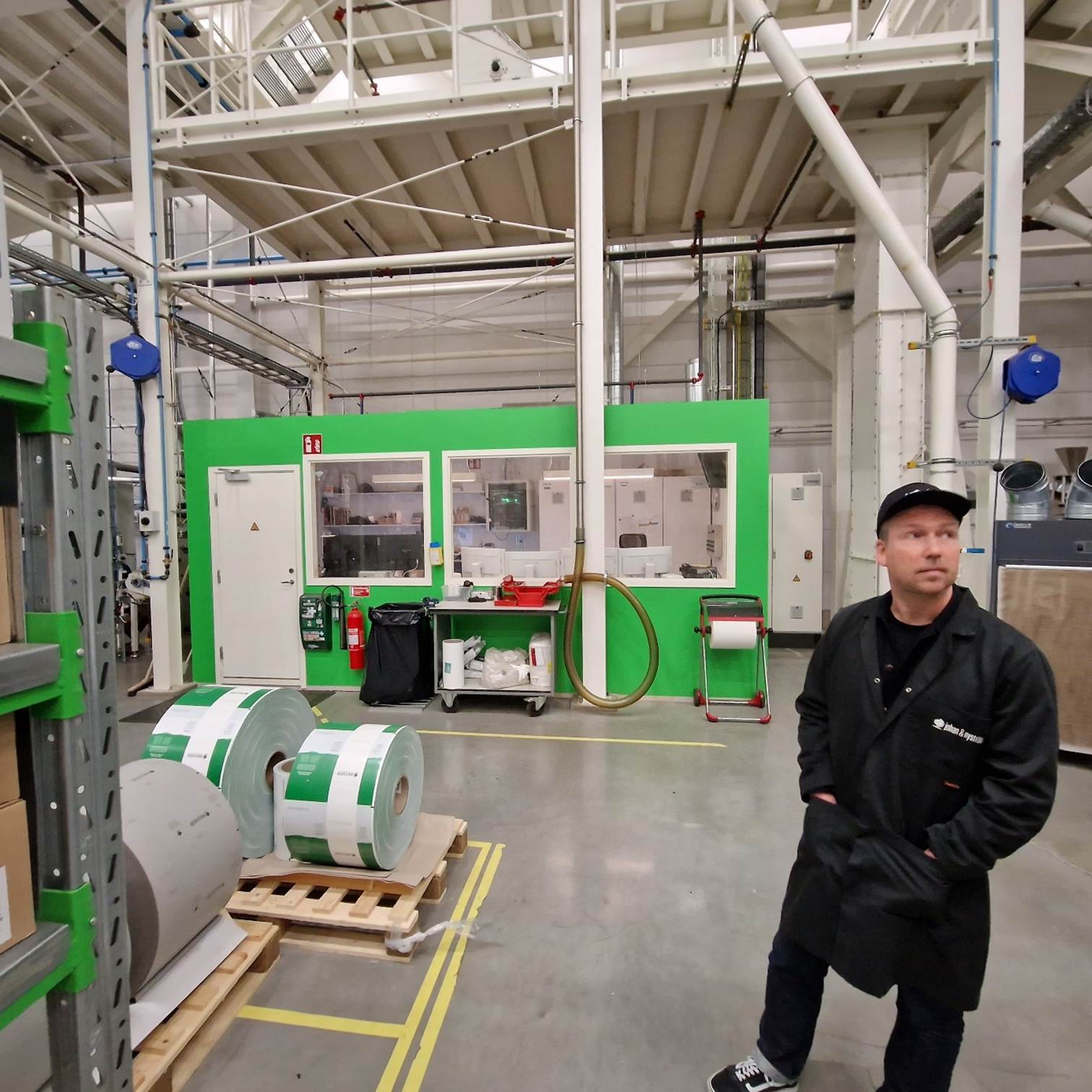
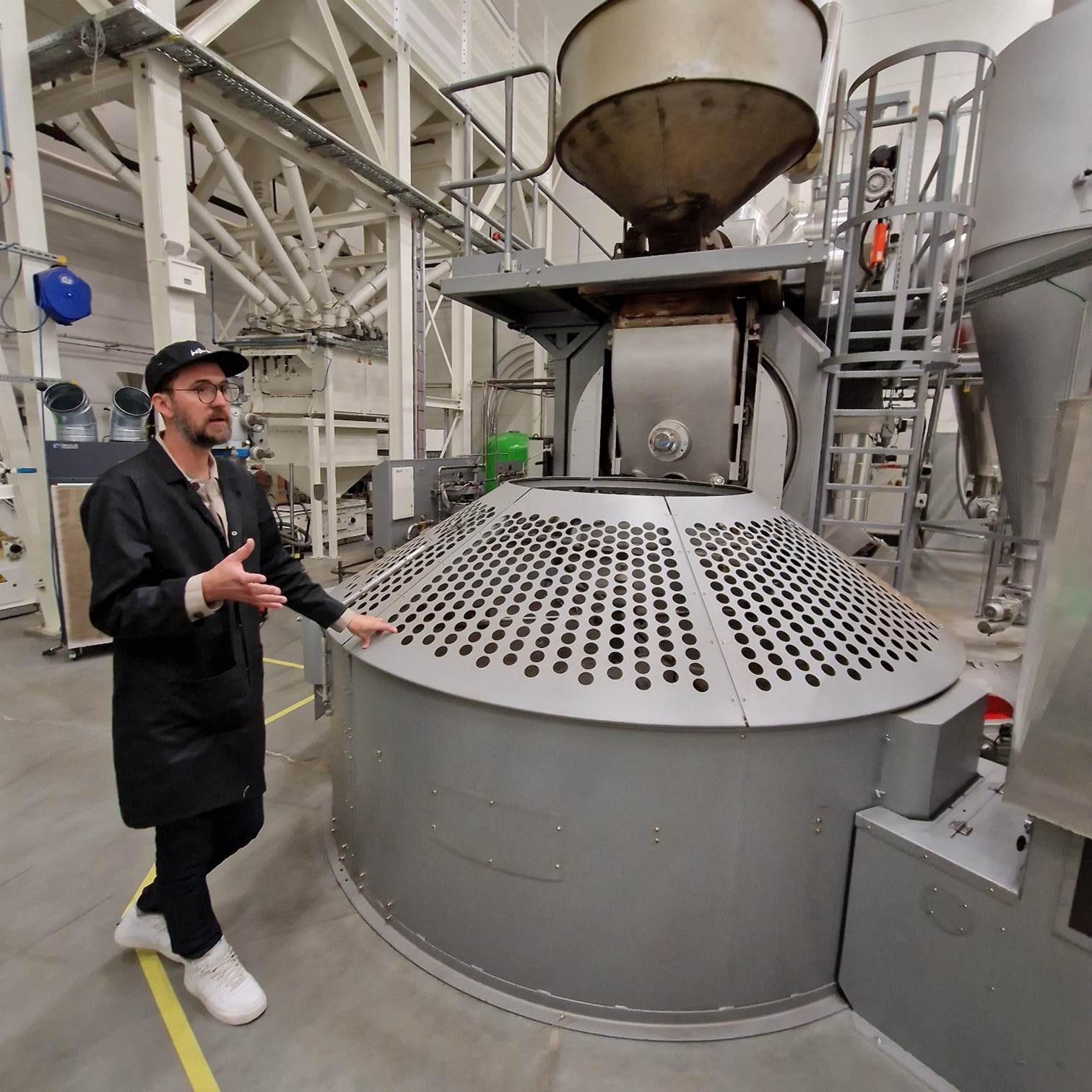
The beans are mixed in a scale and then sent up to a hopper. A hopper can be likened to a large trough that feeds its contents in a steady stream onto a conveyor belt or into a pipe. The beans are fed from this into the heat and then rotate in a drum in the oven for exactly the right amount of time at exactly the right temperature curve to create the perfect roast profile and give the green coffee its optimal flavour profile.
Roasting & Cooling
We did not find out the exact temperature curve for Bourbon Jungle, but coffee beans are normally roasted progressively from 177 degrees Celsius at the start of roasting up to about 218 degrees at the end. Approximately 10-12 minutes for dark roast (and a few minutes shorter for light roast). When the roasting is complete, the beans are sent out for rapid cooling. The faster the cooling, the more control the roaster has over the process. Often, a few litres of cold water are added inside the roasting drum just before discharge to speed up the cooling process.
Once the beans have cooled, they are sent up a pipe in the ceiling where they travel through the system in a mostly oxygen-free environment to minimise oxidation. Up there, the roasted coffee beans await packaging in the right bag. Next to the packaging machine are rolls of foil with the right print for the right product. The roll is mounted next to the machine and then bag after bag is created as the machine cuts the foil to the right size and welds it into a bag shape. The machine holds the bag open and the pipe opens quickly, releasing the right amount of beans into the bag, which is then sealed and checked for weight before finally being sent on to be placed six by six in cartons.

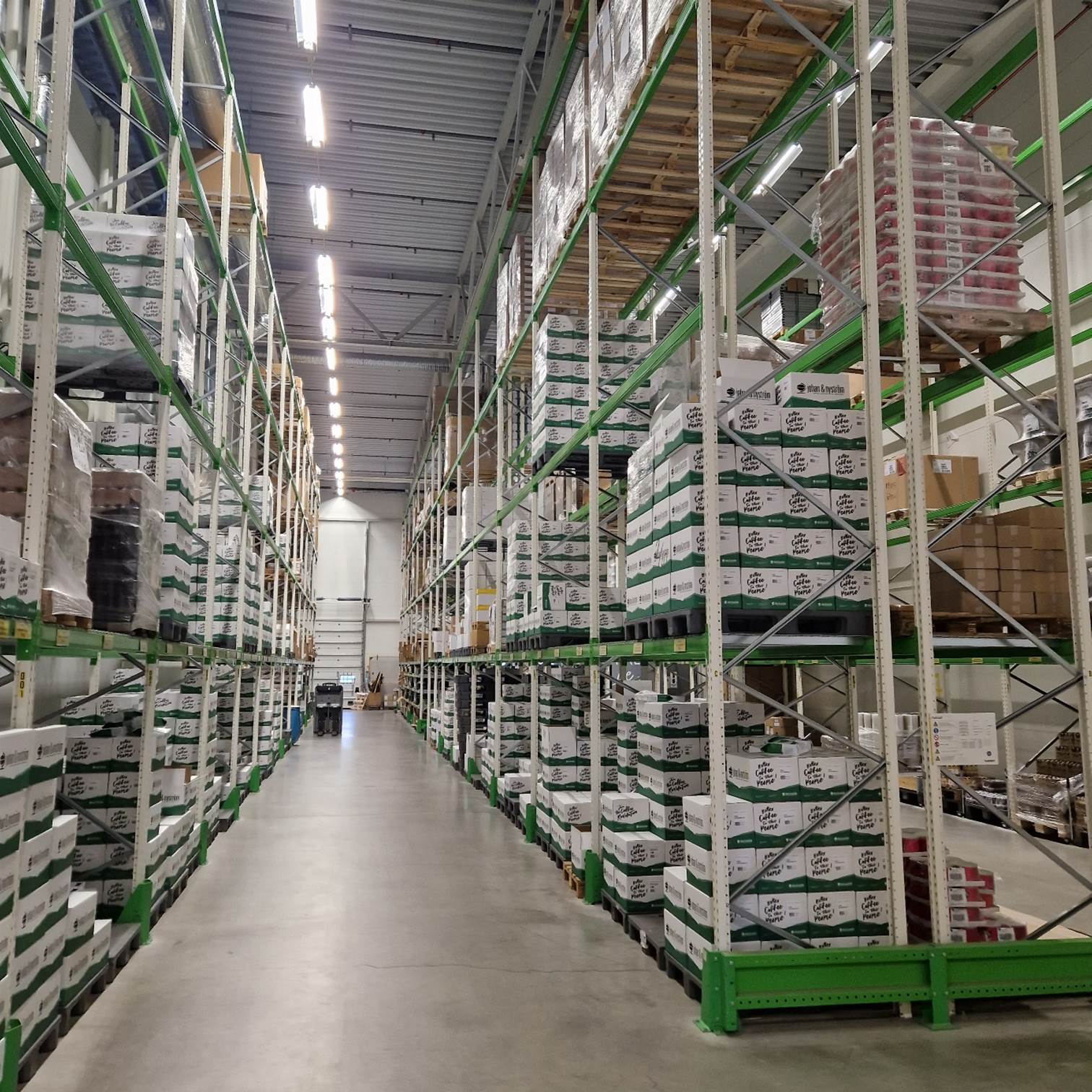
All finished products are then stacked on high shelves in the final warehouse. Johan & Nyström's roastery ships approximately 1,700 tonnes of coffee per year. About 60% is shipped to Espresso House cafés and the rest goes to retailers, café chains, consumers and small cafés.
Test roasting
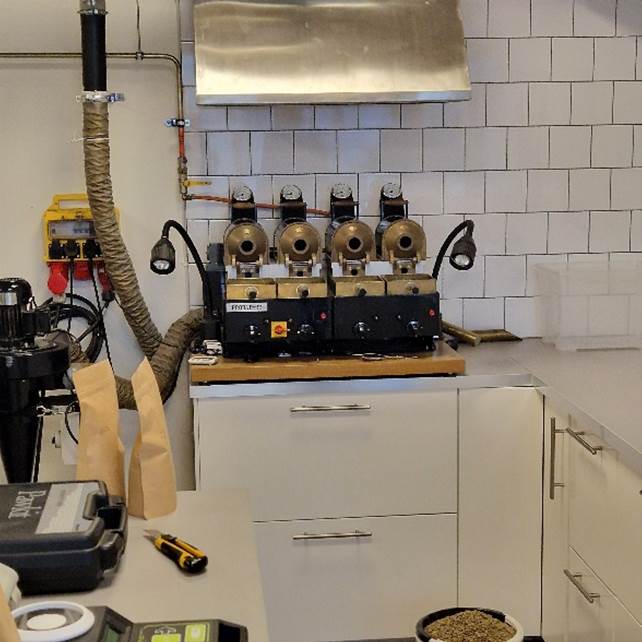
We then take a look inside the test room, where newly arrived green coffee is test roasted in small quantities and where the roasting masters experiment to find the right temperature curve and roasting time. The results are then entered into the mainframe computer that handles commercial roasting. Modern mini roasters controlled via iPads share the space with an old workhorse (retired, we guess, but it still looks good in its place). 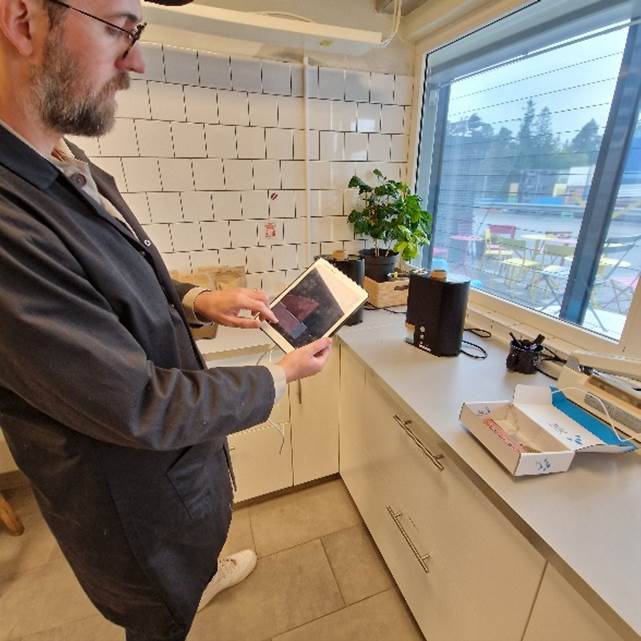
Cup testing
After the tour, we get to take part in "cup testing". Cupping is a structured way of comparing finished coffee. The procedure and preparation of coffee during cupping is standardised worldwide, so the tasting experience is exactly the same whether you are cupping in a hut in Venezuela or in Johan & Nyström's eminent coffee studio in Länna.

Here's how to "cup": grind 12 grams of each of the coffee beans you want to compare. Put the ground coffee in separate cold cups. Keep track of which coffee is in which cup. Then pour 200 ml of boiling water over the coffee and let it steep for 4 minutes. Then carefully break the crust, or crema, on top with the back of the cupping spoon so that the surface coating falls down, and then skim each cup until the crema is gone and the coffee has a clear surface.
Remember to rinse the spoon thoroughly between each step so that you do not contaminate the next cup. Wait a while so that the coffee is not too hot for your taste buds, and so that the flavour comes out better at lower temperatures. Take a spoonful of coffee and slurp it as loudly as you can so that the coffee explodes on your palate. Go back and forth between your test cups and note the differences. Rinse the spoon between each cup.
You can use ready-made templates to systematically note down your experiences. Distinguish between flavours (sweet, salty, sour, bitter) and aromas (spicy, chocolatey, fruity, etc.). Feel free to go into detail, e.g. pepper, roasted peanuts, citrus, etc. Super fun and educational. After our first cupping, our relationship with coffee will never be the same again – nerd alert! 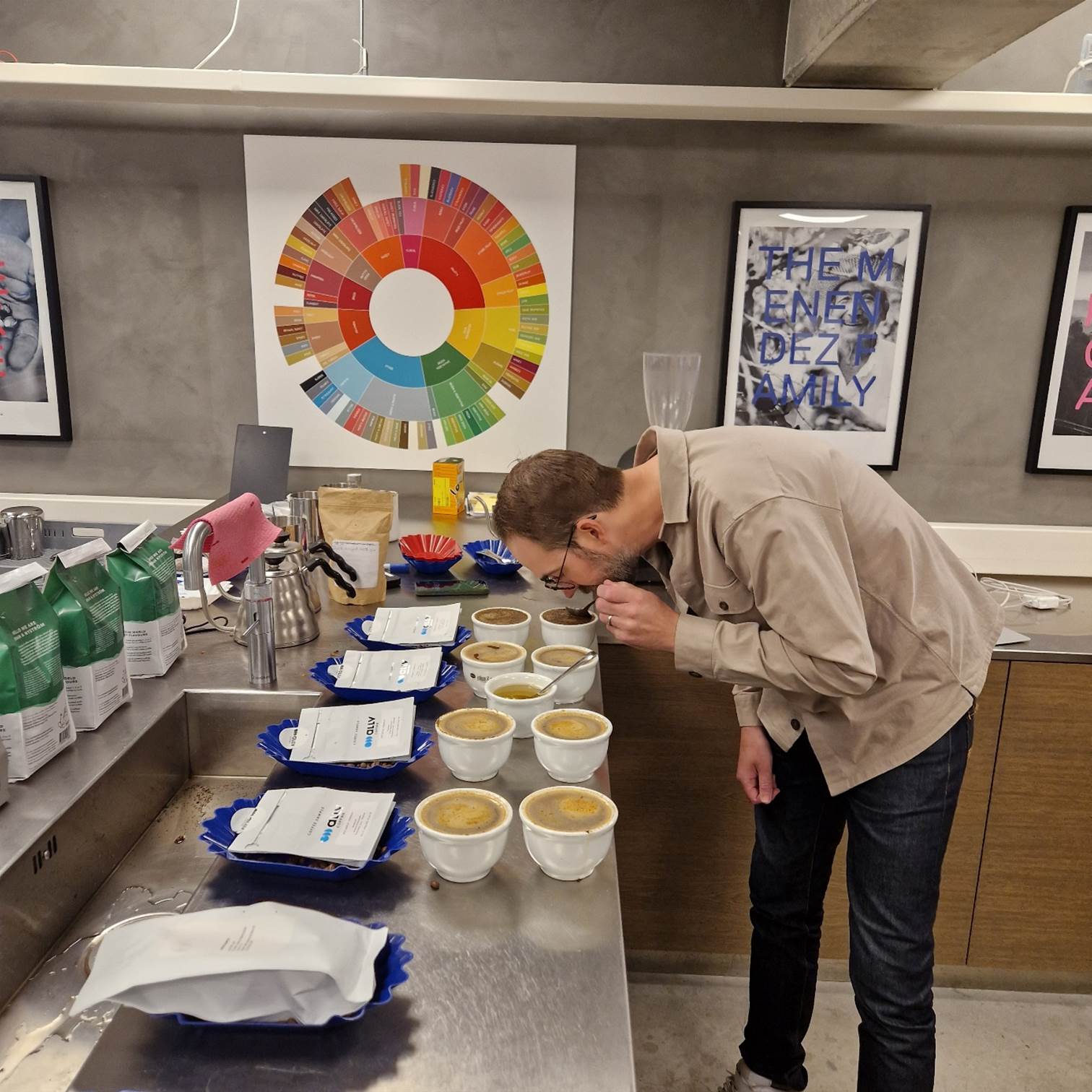
We leave as coffee experts (or so we think...) with a Johan & Nyström cap and two bags of Fika and Bourbon Jungle. Now it's time to go home and brew some coffee!
Many thanks to Johan & Nyström for a lovely day. We at Kaffe.se are very happy and proud to supply your excellent coffee to our customers.